
Wholesale VoIP transforms business communications by offering minutes, SIP trunks, and virtual numbers at reduced prices while ensuring quality and reliability. For service providers, MSPs, ITSPs, and resellers, choosing the right partner is crucial to expanding their portfolio and increasing margins. This guide walks you through the key factors to consider, step by step, to make the best choice in 2025.
Definition of wholesale VoIP
Wholesale VoIP involves buying and reselling voice over IP services in bulk: minutes, SIP trunks, or DID numbers, at highly advantageous rates. Unlike retail providers, these players do not serve end users directly but provide resellers with the means to offer their own services under their brand.
Key wholesale VoIP services
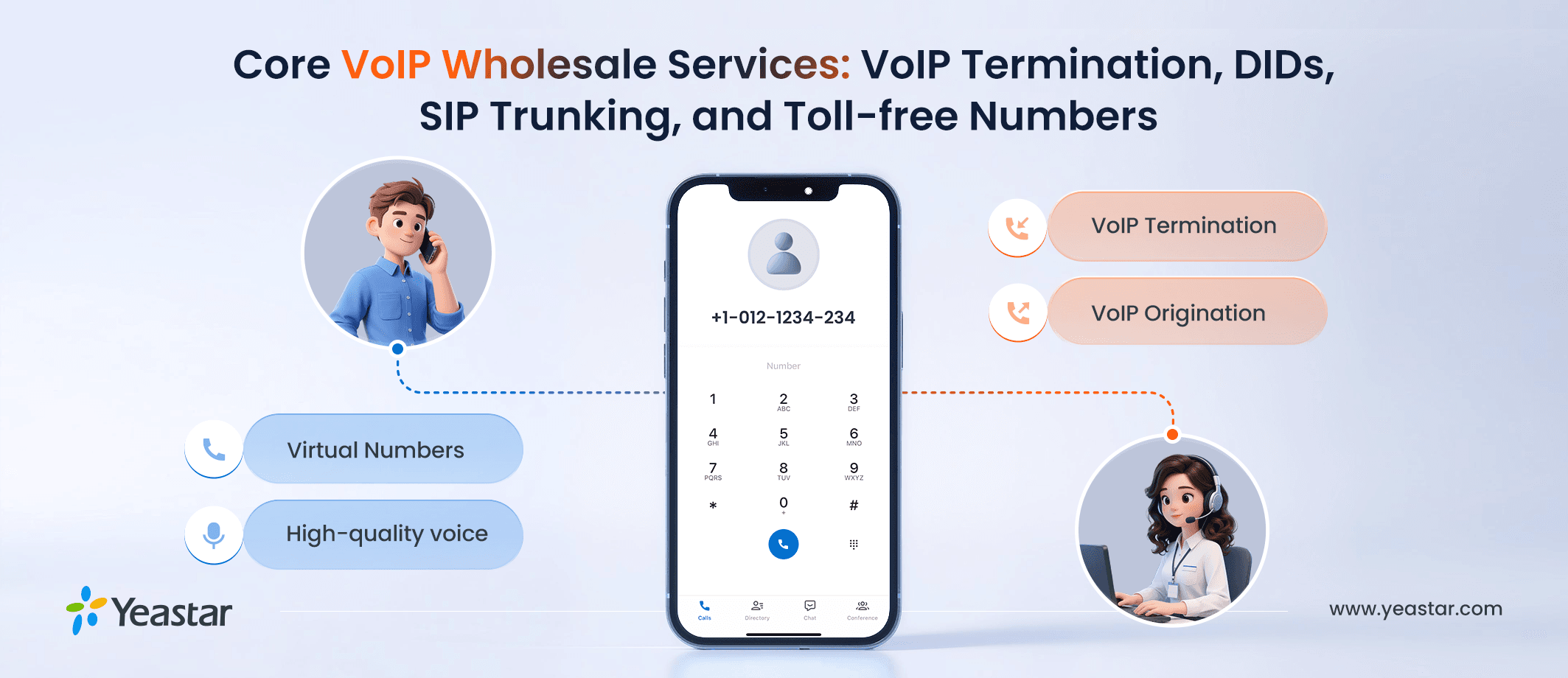
The main offerings are VoIP termination, virtual number origination (DIDs), and SIP trunking. They enable resellers to offer international calls, establish a local presence in several countries, and connect their PBXs to the PSTN over the Internet.
Why wholesale VoIP is essential today
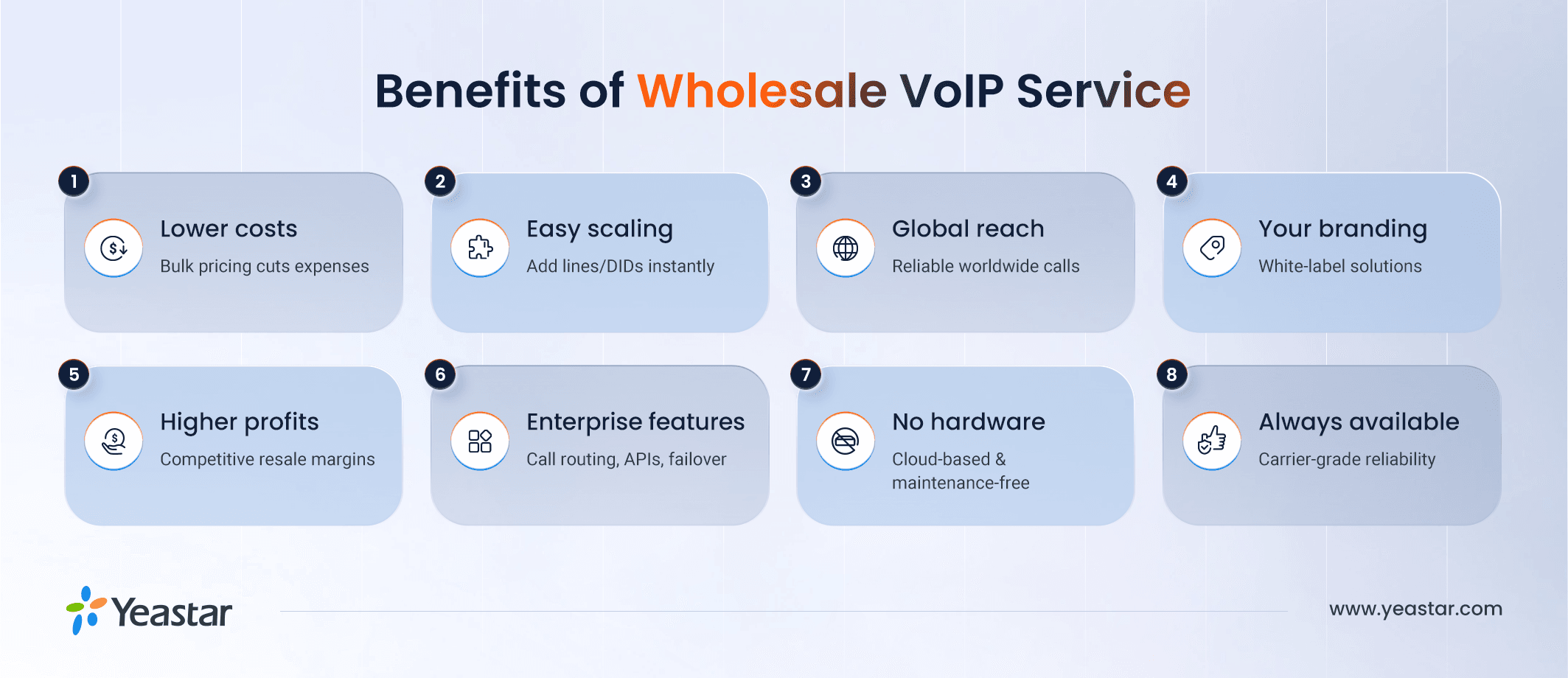
It eliminates the need for costly infrastructure, reduces operating expenses, and offers instant scalability. Providers benefit from carrier-grade quality, HD voice, and built-in redundancy, meeting the needs of a global workforce and cloud communications.
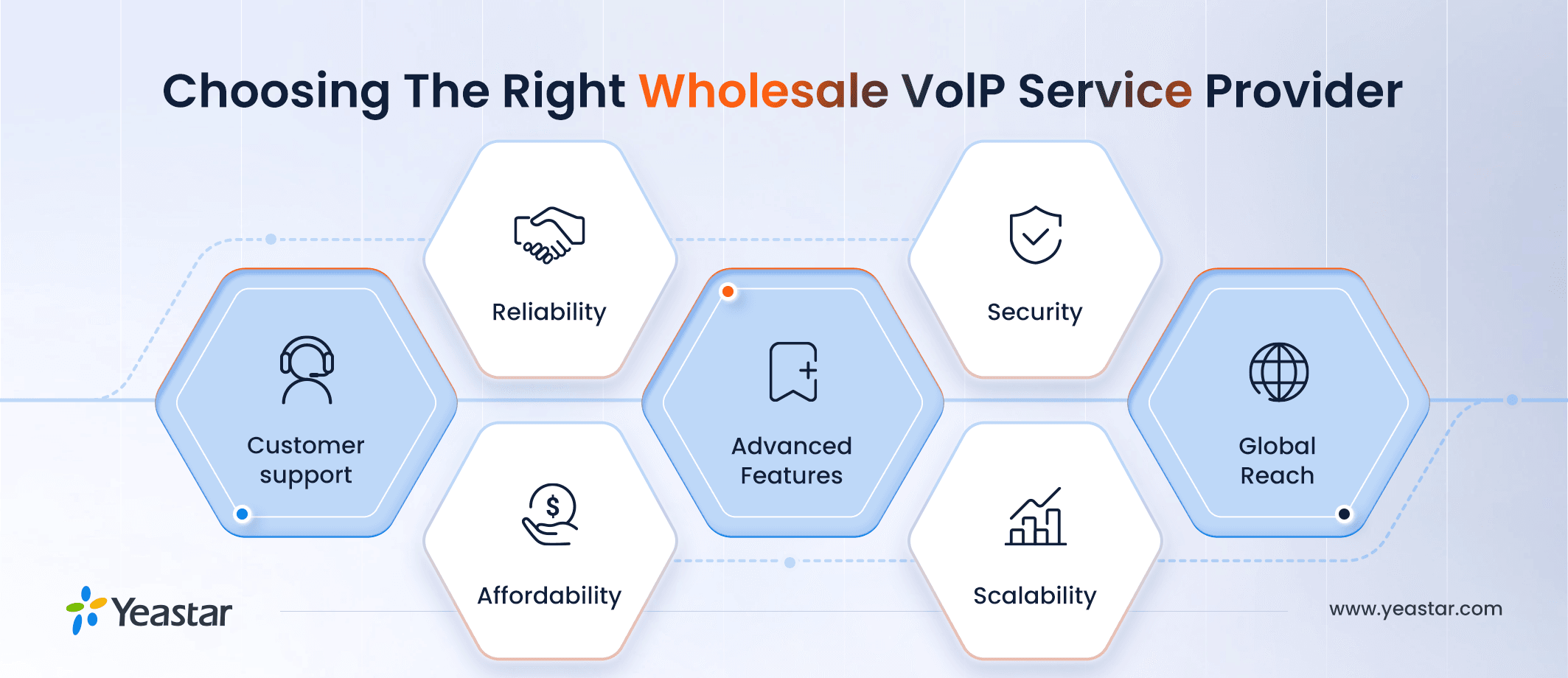
How to choose your wholesale VoIP partner: 7 key criteria
1️⃣ Direct access to Tier‑1 networks for global reach and minimal latency. 2️⃣ A complete white‑label solution to retain control of your brand. 3️⃣ Scalable features and API integrations to stay competitive. 4️⃣ Reasonable cost without compromising SLAs and tax compliance. 5️⃣ 24/7 support, dedicated management, and strategic guidance. 6️⃣ Flexible scalability to grow without constraints. 7️⃣ Intuitive management and billing tools to simplify administration.
Frequently asked questions
1️⃣ Difference between wholesale and retail VoIP: wholesale serves resellers and large users, while retail targets individuals and small businesses. 2️⃣ Starting a wholesale VoIP business: define your model, set up the infrastructure (softswitch, servers), choose a provider, obtain access credentials, and configure the SIP trunks.
The Yeastar team supports businesses and integrators in assessing their needs, selecting an architecture, and preparing for deployment.