The SIP phone, or “Internet Phone,” has become a cornerstone of business communications thanks to its flexibility and advanced features. Unlike traditional landlines, it uses the SIP protocol to establish calls over an IP network, delivering a modern and scalable experience. This guide introduces you to the basics of SIP phones in just a few minutes: how they work, the different models available, and why one may be the ideal solution for your organization.
What is a SIP phone?
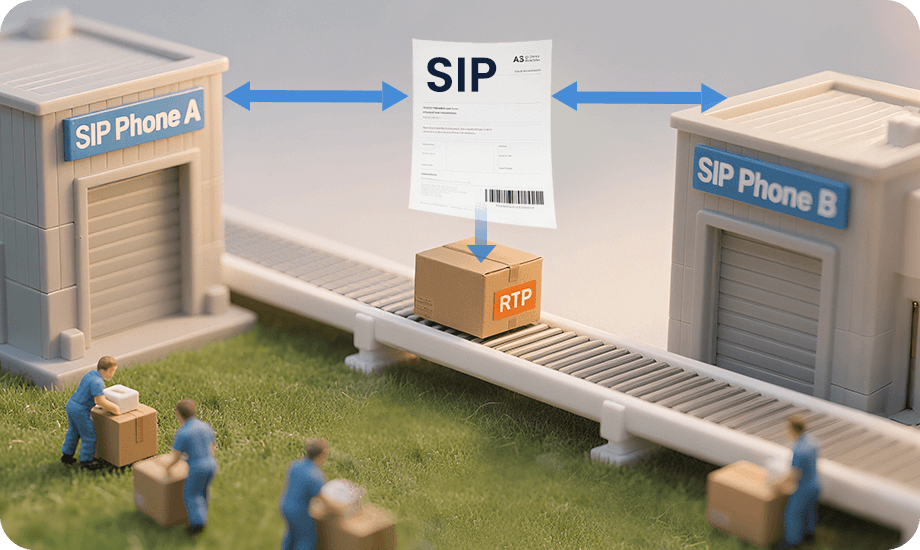
A SIP phone is a device or application that uses the Session Initiation Protocol (SIP) to initiate, manage, and end calls over an IP network. While traditional landlines rely on the public switched telephone network (PSTN), SIP is based on the Internet or private networks to transmit voice and video. The open, standardized SIP protocol enables interoperability between different manufacturers, while media is transported via the RTP protocol.
How does a SIP phone work?
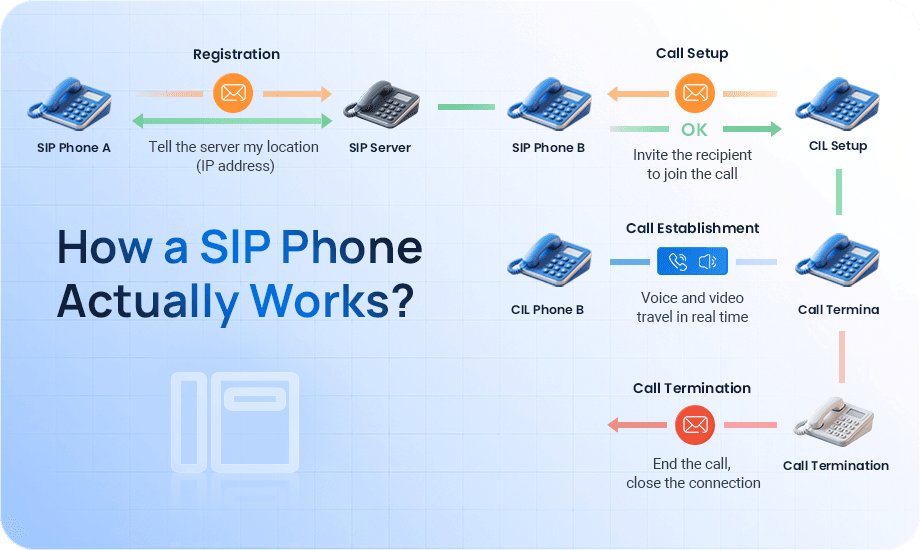
When a SIP phone is powered on, it registers with a SIP server by sending a REGISTER request. When the user dials, the device sends an INVITE message to the server, which locates the recipient and forwards the invitation. After acceptance, the two parties establish a direct connection via RTP to transmit voice and video. The session ends when a BYE message is sent, and the server releases the resources.
The main types of SIP phones
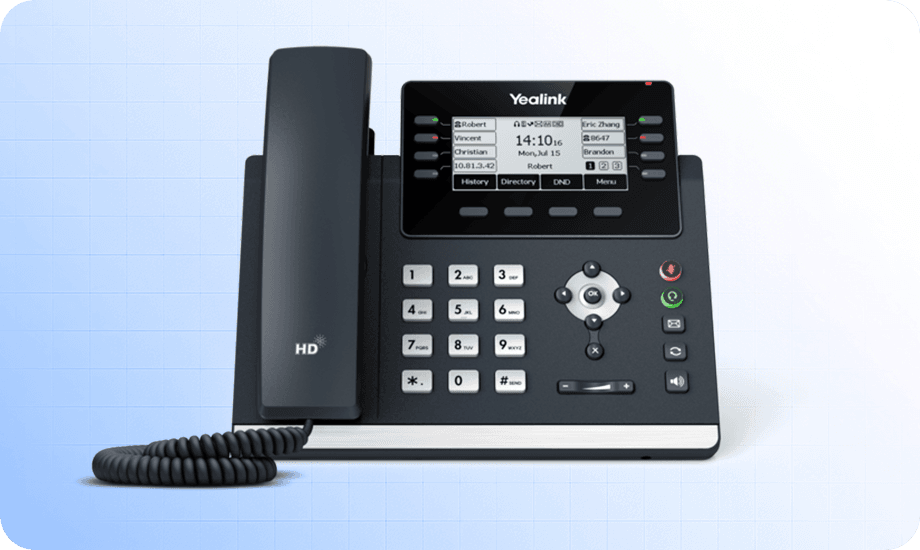
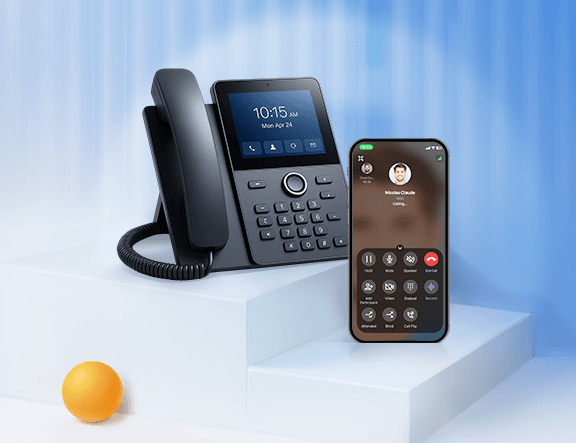
SIP phones come in several categories: hardware phones (traditional desk phones), wireless phones (DECT or Wi‑Fi), softphones (software applications on a PC or mobile device), and embedded devices (intercoms, conference systems). Each type meets specific needs, from stability in the workplace to mobility for remote teams.
SIP vs PSTN vs Cloud Phone
A SIP phone uses the SIP protocol over an IP network, offering video, conferencing, and integration. The PSTN relies on physical lines and provides basic voice calls. Cloud phones connect to cloud-hosted services, offering easy setup but less local control. SIP combines the power of advanced features with the flexibility of on-premises or hybrid deployment.
Key benefits of SIP phones
SIP phones enable greater scalability, seamless integration with business systems (CRM, helpdesk), improved call quality through local control, reduced long-distance call costs, and increased mobility through softphones and wireless devices. They also offer modern features such as transcription, analytics, and automation.
When to opt for a SIP phone service?
Choosing a SIP phone is relevant if your organization is looking for full control over telephony, scalability as it grows, in-depth integration with business tools, and hybrid or on-premises deployment flexibility. It is particularly suited to businesses with video, conferencing, and mobility needs that also want to control costs and quality of service.
The Yeastar team supports businesses and integrators in assessing their needs, selecting an architecture, and preparing for deployment.