
Migrating a PBX system or unified communications platform is more than a simple technical choice. For IT service providers, it affects deployment models, operational efficiency, security posture, and long-term customer relationships. When an existing PBX no longer meets business objectives, it is time to examine the alternatives. Before changing platforms, it is crucial to ask the right questions to ensure a strategic rather than reactive transition.
Operational Benefits of Yeastar P‑Series
Choosing Yeastar means opting for a flexible business model with no direct competition, no forced updates, white-label options, and SC or extension-based licenses suited to each customer size. Centralized management lets you monitor multiple instances from a single console, perform bulk updates, backups and restores, and proactively monitor the system. Granular access controls, compatibility with over 500 IP phones, and integration with over 210 SIP trunk providers enhance flexibility. The Linkus UC client offers a modern desktop, web, and mobile experience, while built-in security ensures encrypted and protected communications.
Security of the Remote Access Service (RAS)
With remote work and hybrid offices, secure connectivity is essential. Yeastar’s RAS is a private tunnel that encrypts signaling and media traffic through an integrated cloud SBC, without storing data. Each PBX has a unique encryption key, ensuring confidentiality and compliance. Administrators can restrict access by IP or account, blocking or allowing specific extensions or groups. RAS, on-site Proxy, and encrypted transmission ensure robust security.
Flexibility for multinational organizations
Yeastar lets you configure a single PBX for multiple brands, regions, or business units. You can assign distinct hold music, welcome messages, or ring tones to each extension or group. The platform supports up to 24 independent time zones, each with its own business hours and holiday rules, as well as selectable outbound caller IDs. Multilingual voicemail support and granular role-based permissions provide a personalized experience while reducing infrastructure complexity.
Integration Capabilities
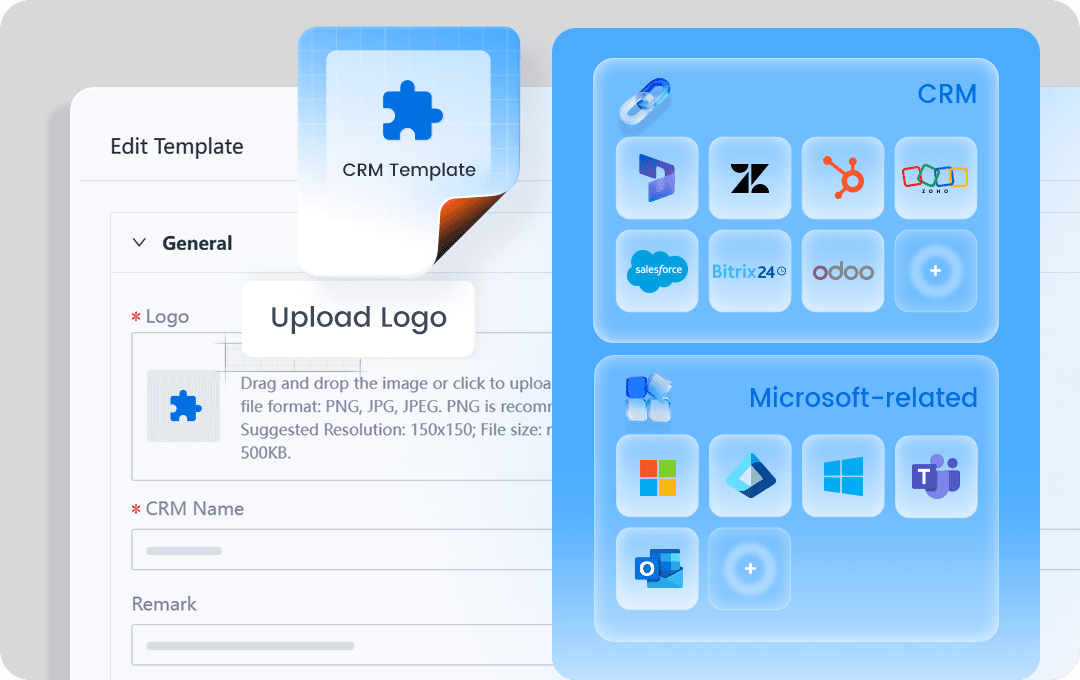
Yeastar integrates CRM systems, helpdesk platforms, and collaboration tools. REST integration templates are available for Salesforce, HubSpot, Zendesk, Odoo, Microsoft Dynamics, and many others. Compatibility with Microsoft Teams lets you make calls from Teams, while omnichannel combines WhatsApp, Facebook Messenger, SMS, and Live Chat in a single flow. Specific modules, such as the hospitality module, align with PMS systems to streamline front-desk communication.
White Label and Customization
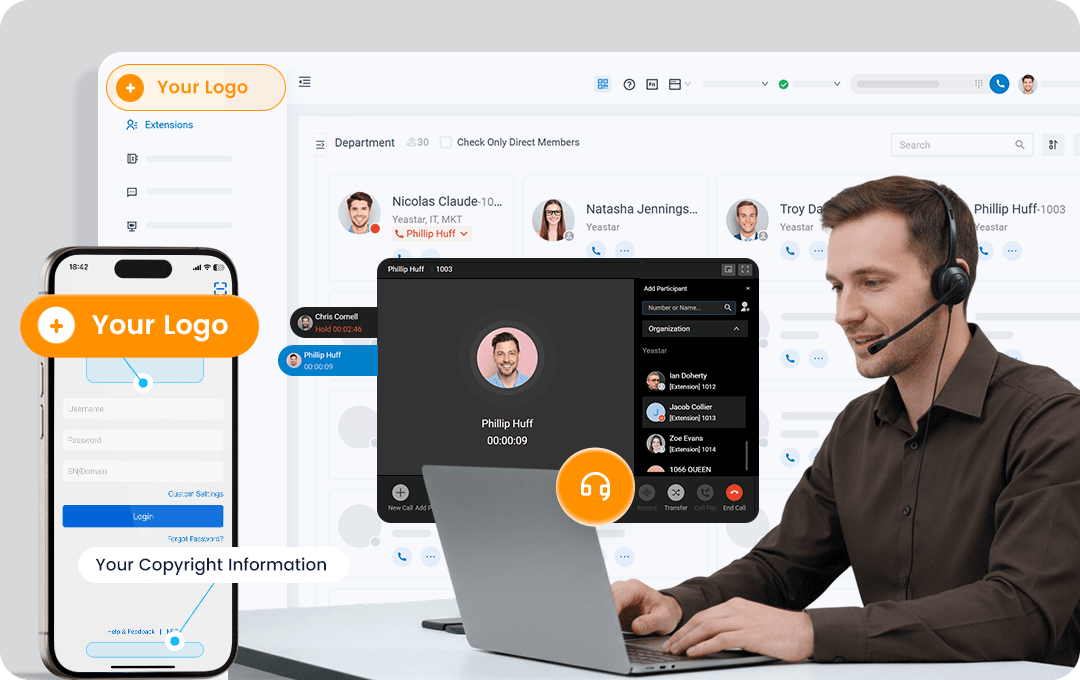
Yeastar offers a complete white-label package: PBX platform, softphone applications, and YCM management console. Partners can add their logo, set a custom PBX domain, style login pages, and choose interface colors and themes. This customization increases brand visibility, optimizes margins, and removes the provider’s presence from the customer experience.
Deployment options
Yeastar offers two models: self-hosted and hosted by Yeastar. Self-hosting allows deployment on on-site servers, in public clouds (AWS, Azure, Google Cloud, OVH, etc.), or on virtualization platforms (VMware, Hyper-V, KVM, Proxmox). Yeastar-hosted deployment provides managed cloud instances in regional data centers, eliminating server maintenance while ensuring performance and scalability.
Licensing options
Yeastar offers concurrent (SC) or extension-based (Ext.) licenses. SC licenses let you manage the number of simultaneous calls, while extension-based licenses charge for each individual endpoint. This flexible model adapts to each customer’s needs, whether a small business or a large organization.
The Yeastar team supports businesses and integrators in assessing their needs, selecting an architecture, and preparing for deployment.