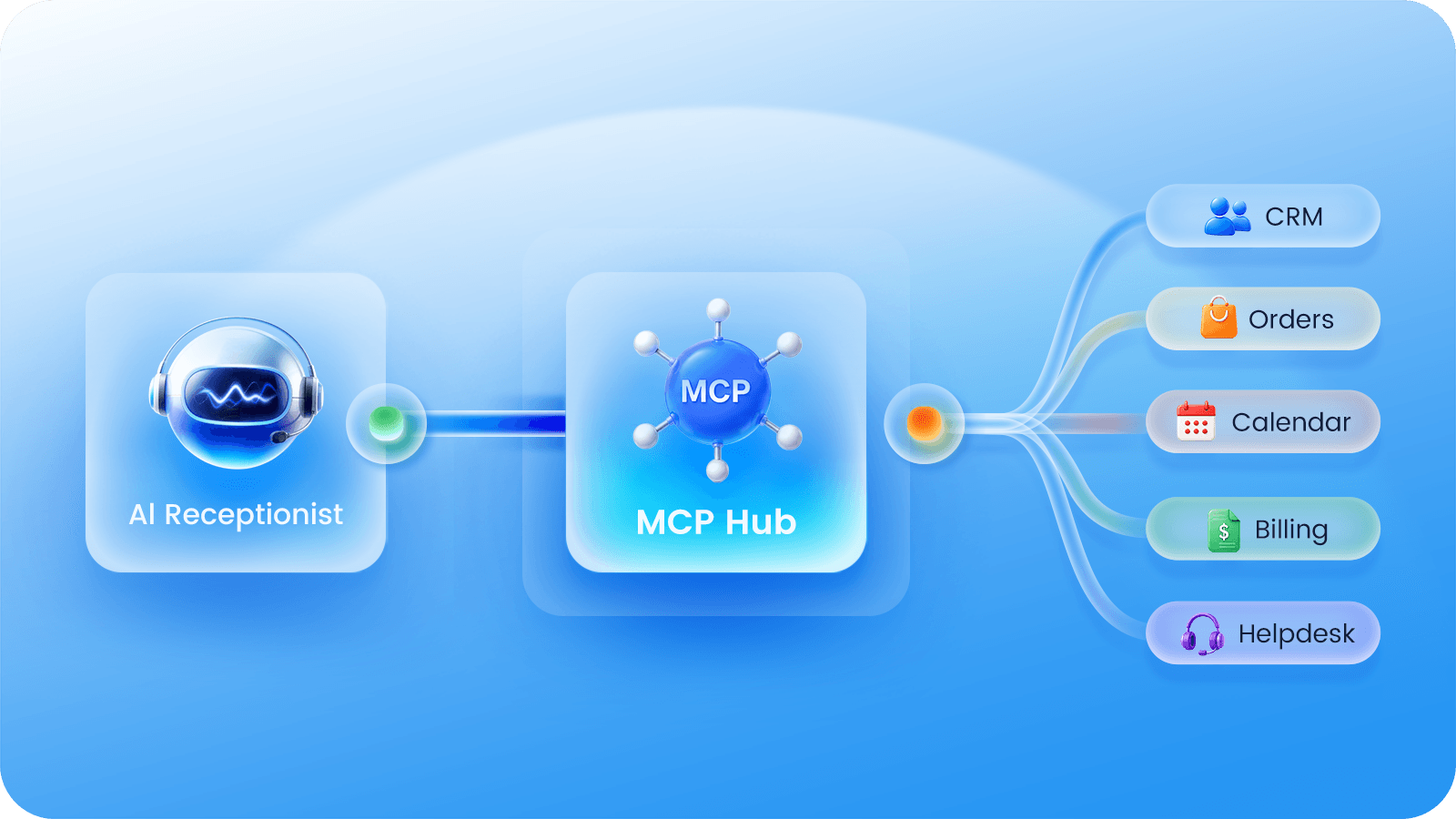
Modern AI receptionists can already query external systems, but each connection often requires custom code. MCP, an open protocol launched by Anthropic, offers a standardized approach that enables AI to automatically discover and use available tools, data and services. This solution transforms how business systems are integrated, making extensions simpler, faster and less costly.
What is MCP?
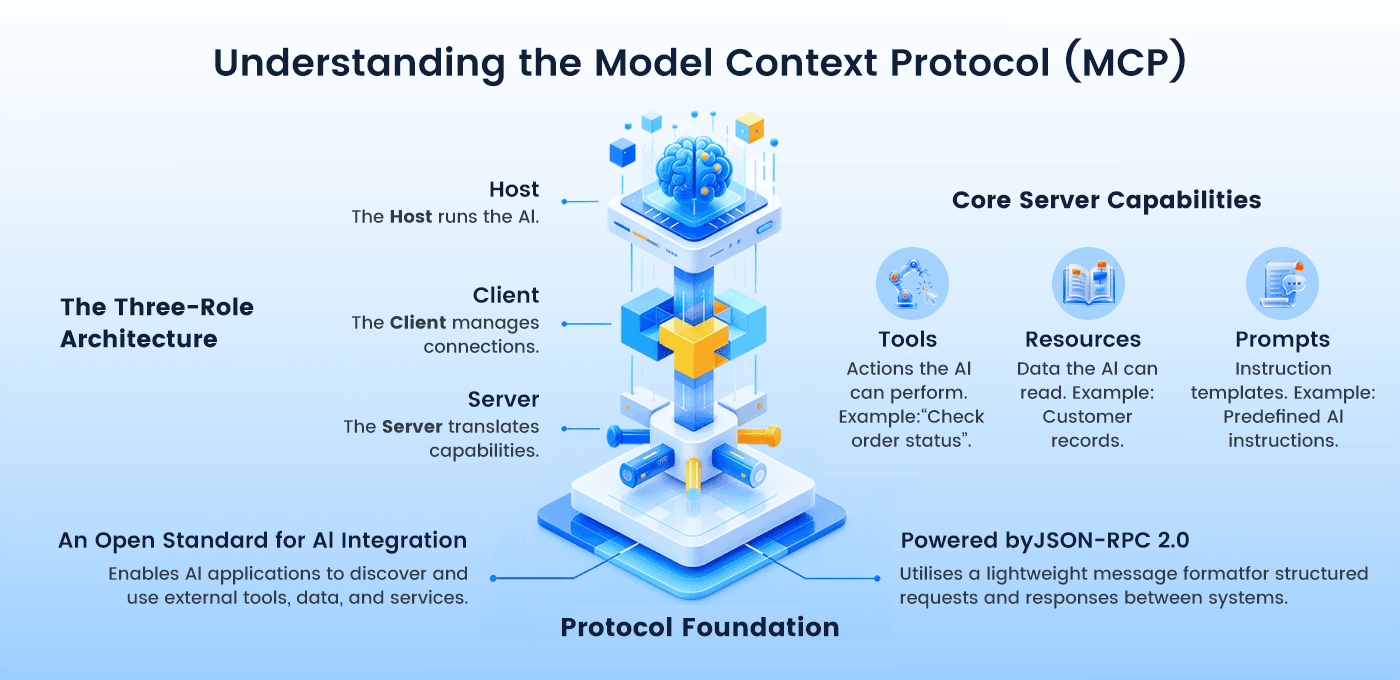
MCP, short for Model Context Protocol, is an open protocol that defines a JSON‑RPC 2.0 format for AI discovery and use of external resources. It is based on three roles: the host (the AI application), the client (the connection layer) and the server (an interface that translates a business system’s capabilities). Each server exposes tools, resources and predefined prompts, described in natural language, enabling AI to select and call the appropriate functions without additional code.
Why AI receptionists need MCP
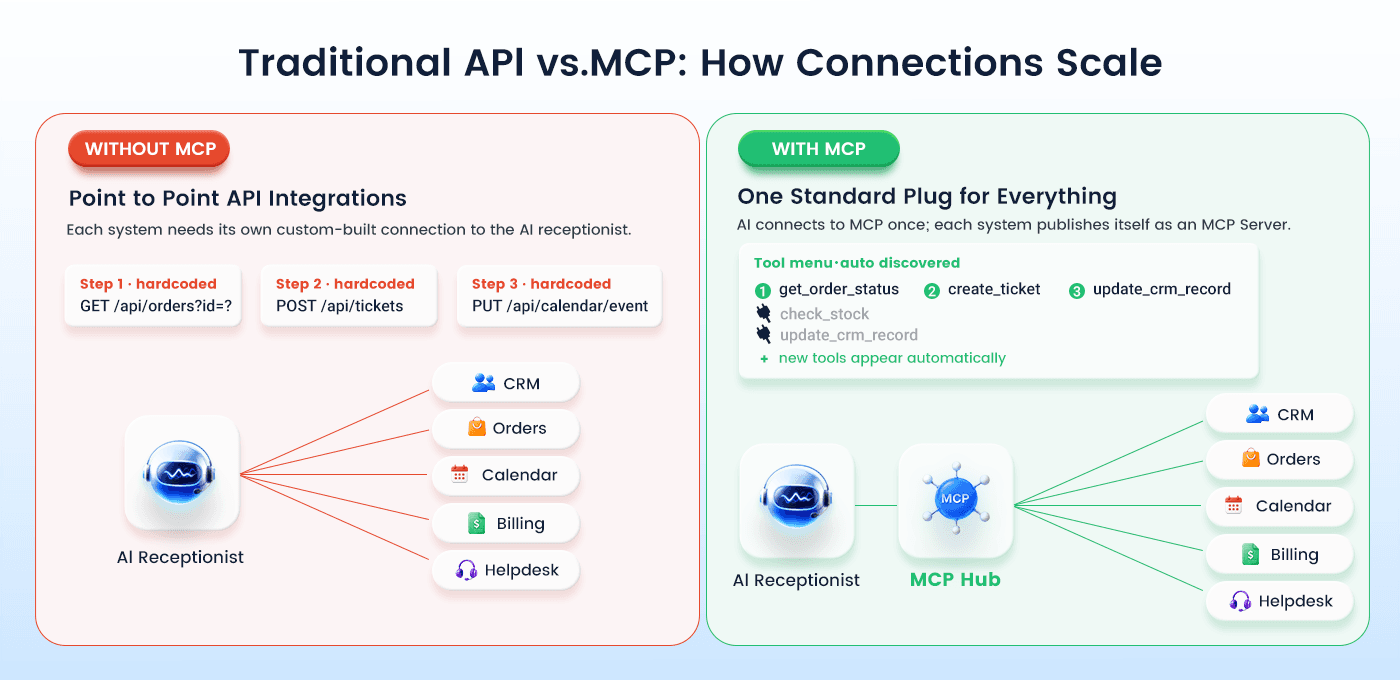
The value of an AI receptionist depends on the range of systems it is connected to. Traditional integrations multiply effort and costs: each new system requires a complete set of custom APIs. MCP eliminates this problem by publishing a system’s capabilities as a standard server. So when a service adds a new function, AI discovers it immediately without PBX reconfiguration, drastically reducing maintenance and expansion costs.
How MCP works inside an AI receptionist
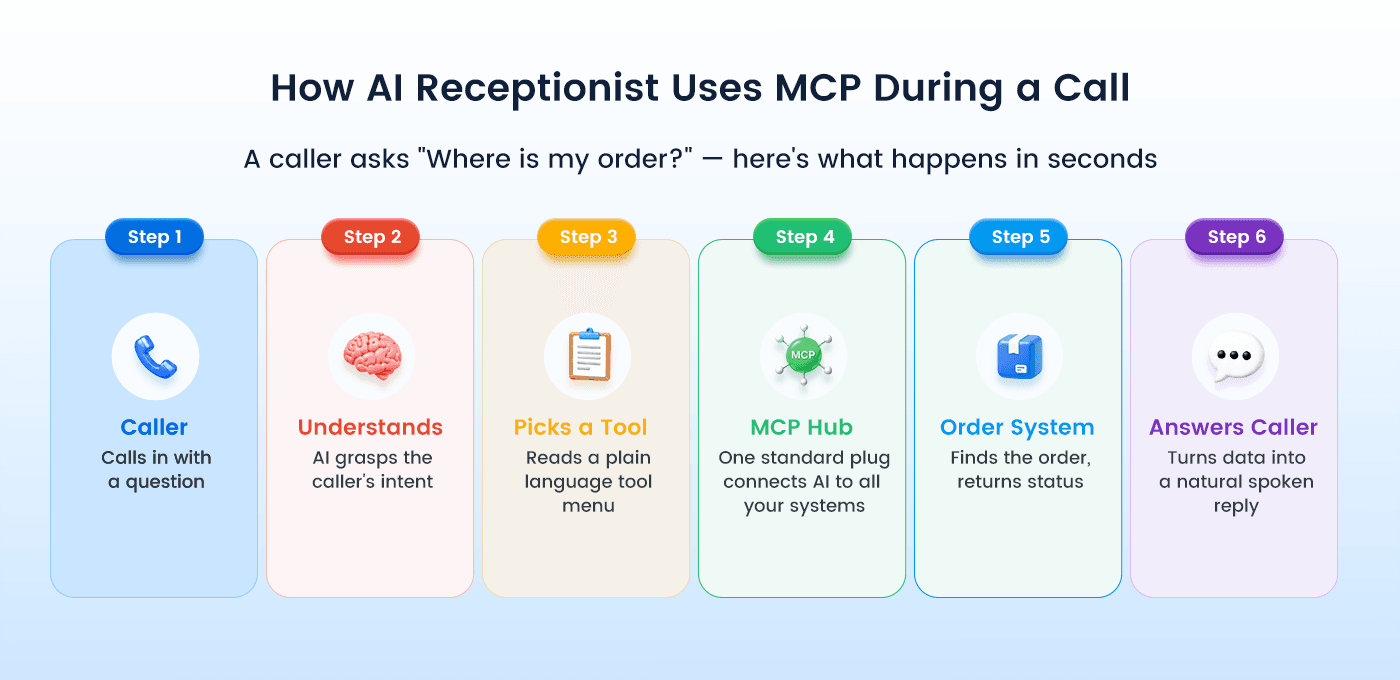
When a call comes in, the AI analyzes the intent, scans MCP server descriptions and selects the appropriate tool, such as “get_order_status”. It sends the request, receives a structured result, then generates a spoken response. MCP also makes it possible to manage wait time with pre-prompts, run actions in the background and choose whether the caller can interrupt a tool call.
Yeastar P‑Series + MCP integration
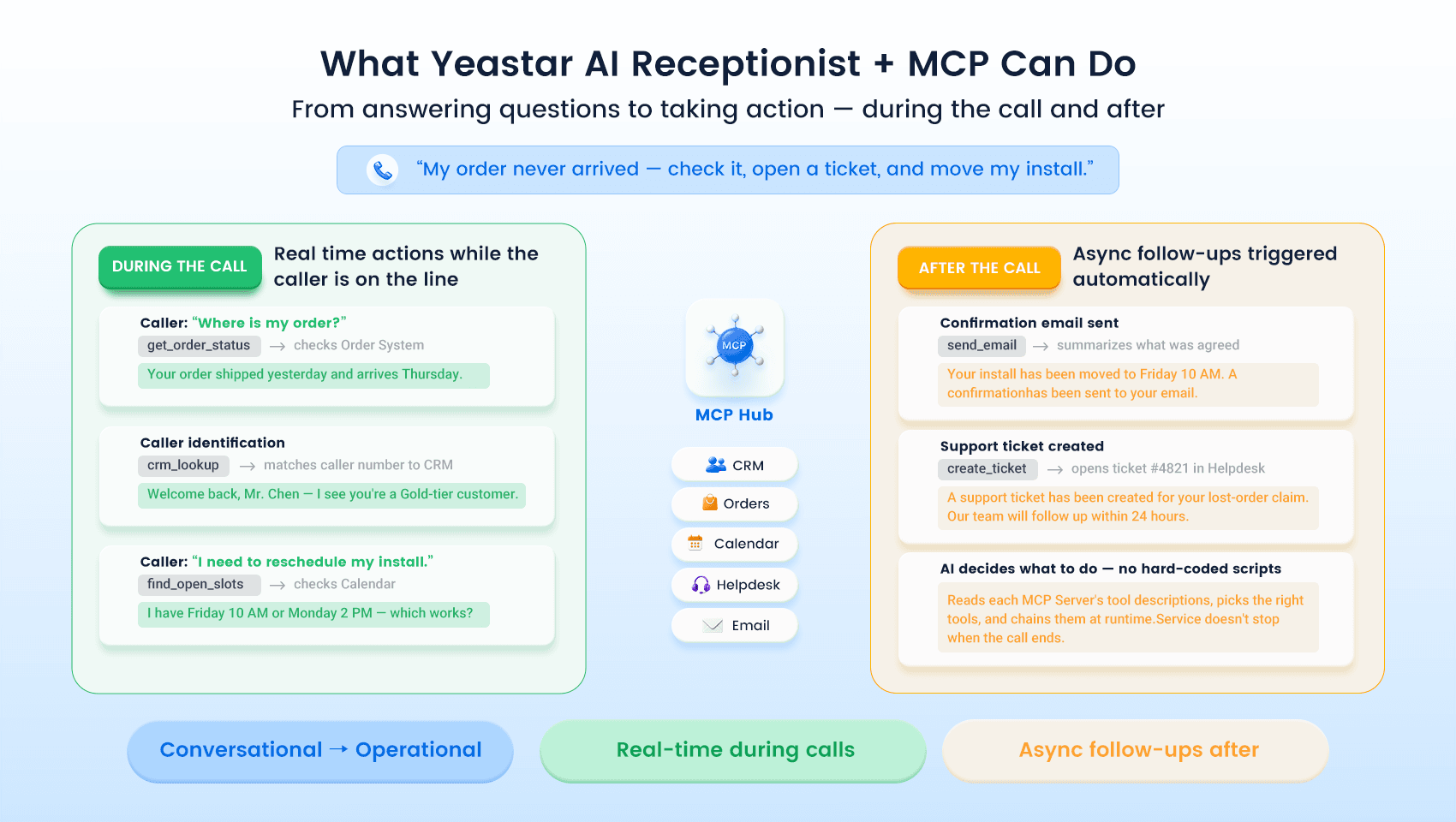
With MCP support, the Yeastar P‑Series system turns the reception desk into an operational service. A PBX can host up to 20 MCP servers, and each AI receptionist can be configured for up to 5 of them, targeting the most relevant systems. This makes it possible to check order statuses, open tickets or schedule meetings in real time without transferring the call to a human agent.
The Yeastar team supports businesses and integrators in assessing their needs, selecting an architecture, and preparing for deployment.