In the age of digital transformation, most businesses are turning to the cloud for their communication needs. This shift enables more agile, cost-effective and easy-to-manage solutions, particularly for remote work, customer support and team collaboration. This article guides you through the definition of cloud communications, their benefits, essential components and the criteria for selecting the platform best suited to your needs.
What Are Cloud Communications?
Cloud communications deliver voice, video, messaging and collaboration over the Internet through platforms hosted by service providers. Unlike traditional on-premises systems, everything is managed remotely, making the solution more scalable, flexible and cost-effective.
Cloud Communications vs. Traditional Communications
Cloud systems rely on VoIP, UCaaS, and a virtual PBX, eliminating physical telephone lines and on-premises hardware. They offer low upfront costs, recurring subscriptions, and advanced features such as video, chat, and automation, while traditional solutions require heavy investments in hardware and ongoing maintenance.
Key components of cloud communications
The main technologies include VoIP, UCaaS, cloud messaging, and cloud PBX. Each provides specific features, ranging from capturing audio over the Internet to integrating instant messaging and collaboration tools.
VoIP – the foundation of cloud telephony
VoIP enables voice and multimedia calls over the Internet, replacing traditional landlines. It is at the core of cloud phone systems, offering flexibility and scalability.
UCaaS – a unified platform
UCaaS brings voice calls, video conferences, instant messaging, and other services together in a single cloud interface. It enables businesses to quickly adjust their capabilities based on team size or operational needs.
Cloud messaging – omnichannel communication
Cloud messaging enables SMS and MMS to be sent and live chats to be managed over the Internet, providing fast, multichannel communication. Tools such as WhatsApp Business, Slack, or Telegram are often integrated.
Cloud PBX – a virtual exchange
Cloud PBX replaces physical phone systems with a cloud-hosted solution, offering business features such as auto-attendant, voicemail transcription, and integration with other services.
Benefits of a cloud communications platform
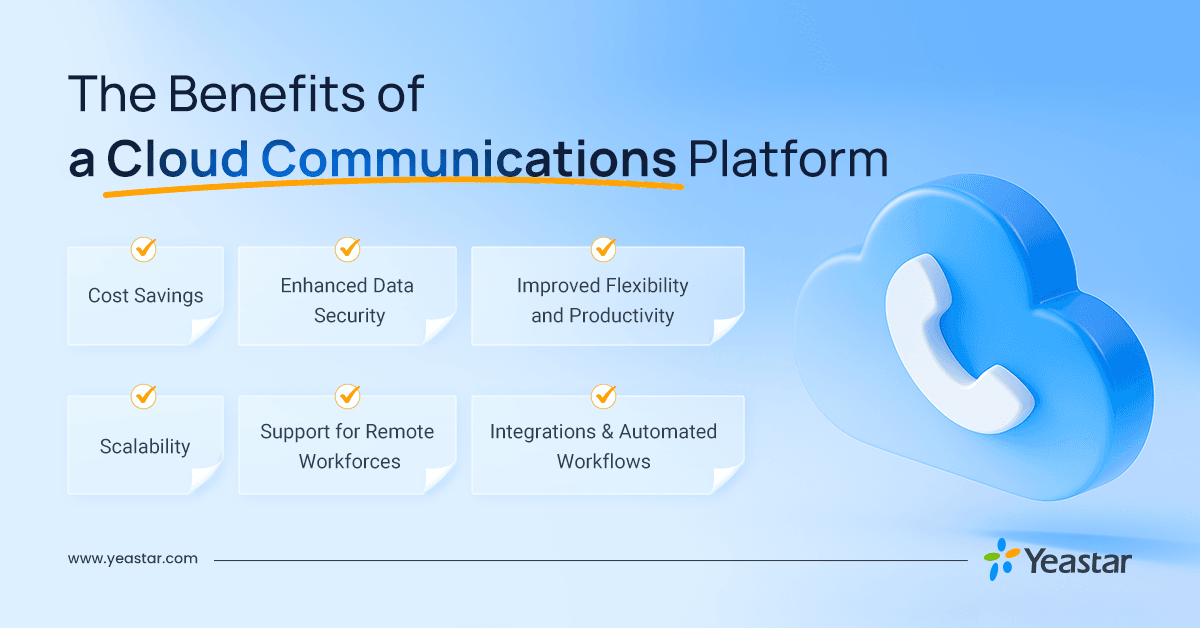
Key benefits include cost savings, scalability without additional hardware, enhanced security through encryption and automatic backups, and flexibility that supports remote teams and automated workflows.
How to choose the right cloud platform?
First define your business needs, compare customer reviews, assess scalability, and prioritize unified management. For regulated industries, ensure the solution meets the required security and compliance standards.
Grow your cloud business with the Yeastar UCaaS platform
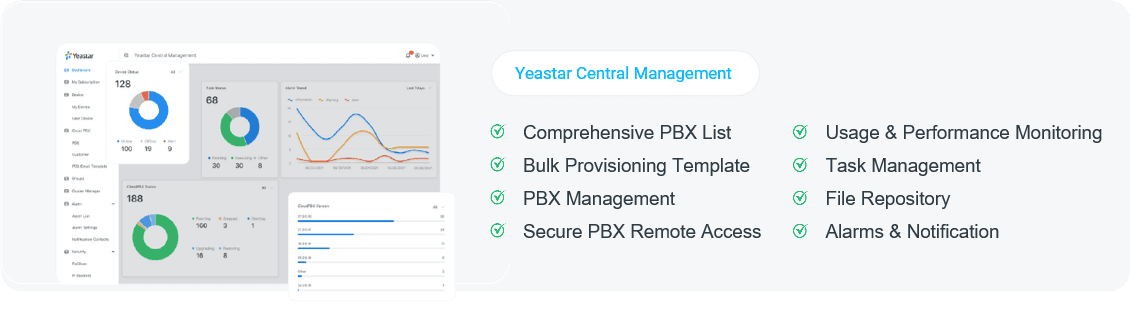
Yeastar offers a future-ready UCaaS platform with white-label customization, centralized multi-client management, and enterprise-grade capabilities, ideal for service providers looking to offer high-performance cloud solutions.
The Yeastar team supports businesses and integrators in assessing their needs, selecting an architecture, and preparing for deployment.