
In the world of IP telephony, the terms “SIP line” and “SIP trunk” are often confused. However, they meet very different needs. Whether you are a sole proprietor or a team of several dozen employees, understanding these two concepts will help you choose the solution best suited to your business.
What is a SIP line?
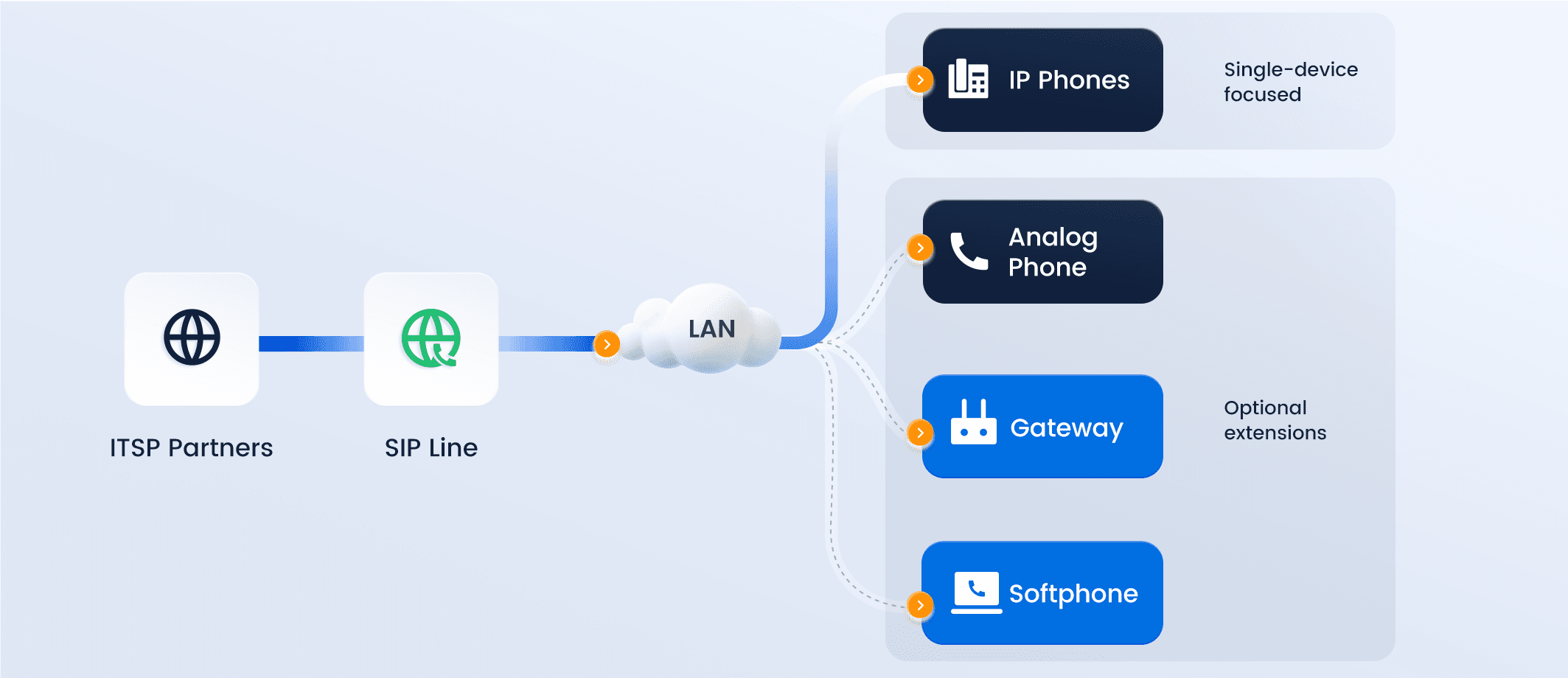
A SIP line is a virtual connection that allows a single VoIP device, such as a desk phone or mobile app, to make and receive calls over the Internet. Unlike traditional telephone lines, it uses your Internet connection to transmit voice, offering a modern and cost-effective alternative.
How a SIP line works
The SIP protocol manages call initiation, maintenance, and termination. Once a connection is established, your VoIP device connects to an Internet Telephony Service Provider (ITSP), which routes the call to its destination. A SIP line supports only one call at a time, making it ideal for simple setups.
Who uses SIP lines?
SIP lines are suitable for small businesses, home offices, or individual users who need a single telephone line. For example, an independent consultant can manage client calls through a VoIP phone or softphone app while keeping business communications separate.
Advantages of a SIP line
SIP lines are affordable because they eliminate the need for physical telephone lines. They are quick to set up and compatible with a range of devices, from desk phones to mobile apps.
What is a SIP trunk?
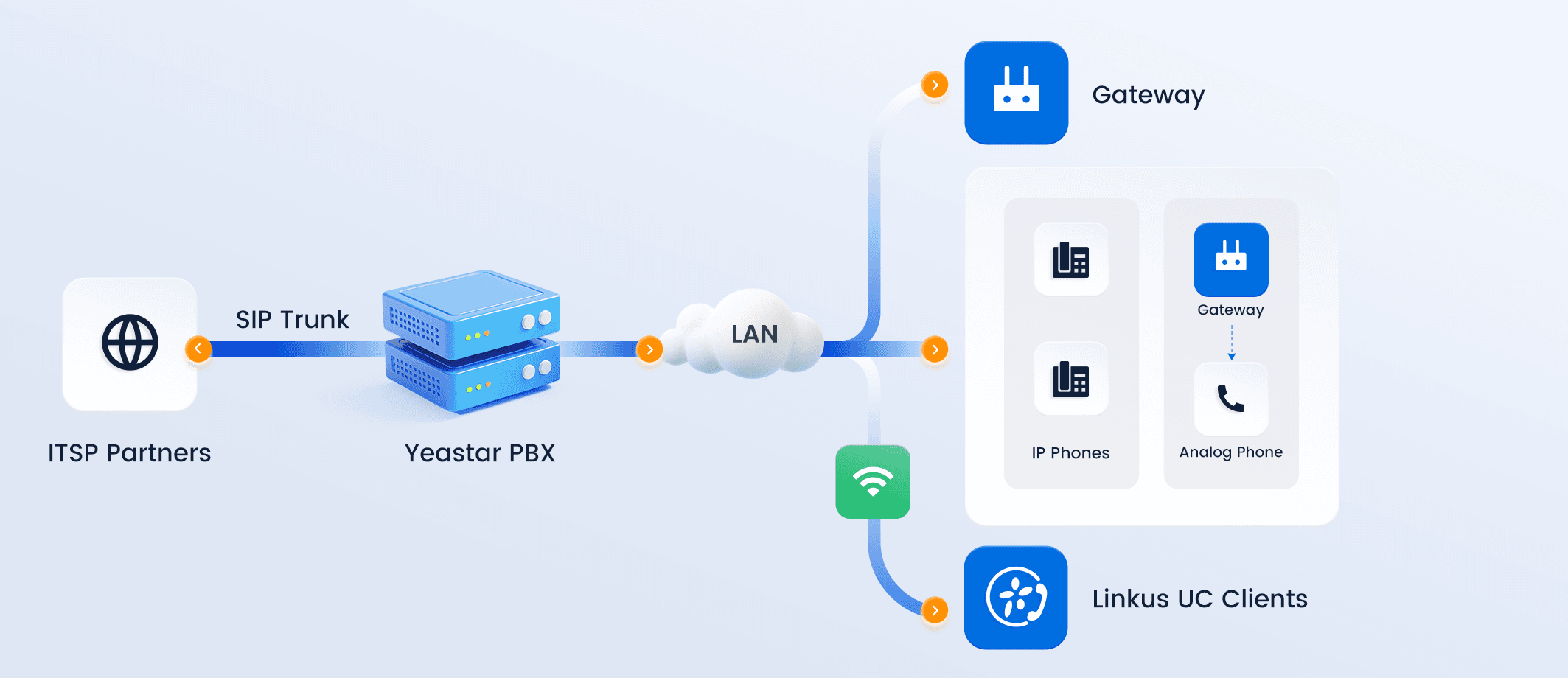
A SIP trunk, on the other hand, is a virtual connection that connects an entire PBX (Private Branch Exchange) system to an ITSP, allowing multiple simultaneous calls to be handled. It is therefore suited to teams or organizations with more complex communication needs.
How a SIP trunk works
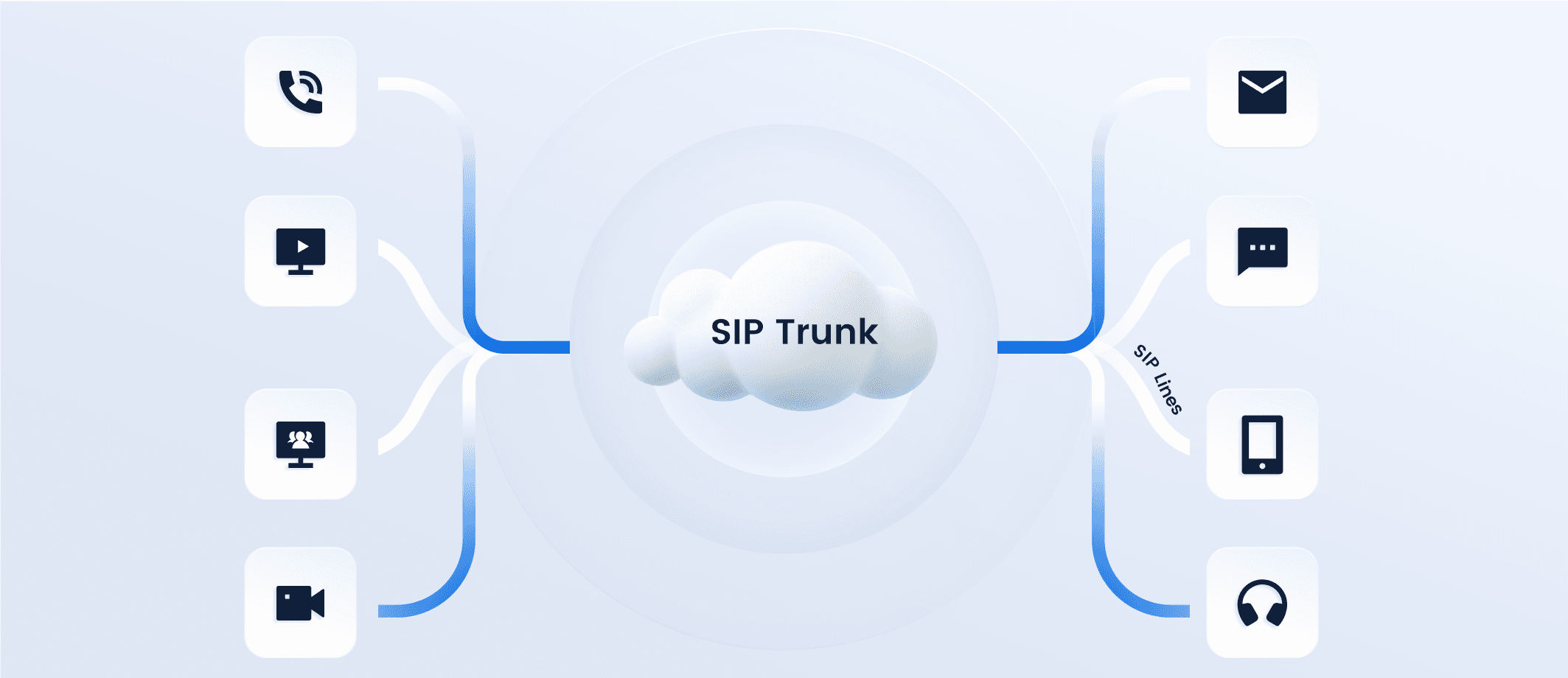
A SIP trunk acts as a digital bridge between your PBX, whether on-premises or cloud-based, and the Internet. Each call occupies one channel on the trunk, allowing a business with 10 channels to handle 10 calls at the same time. It also supports advanced features such as call routing, IVR, and voicemail.
Who uses SIP trunks?
SIP trunks are suitable for medium-sized to large businesses, large teams, or call centers. For example, a 20-person office can rely on a SIP trunk to power a multi-extension phone system, while a customer service center can handle dozens of simultaneous calls.
Advantages of a SIP trunk
SIP trunks are scalable: simply add channels to support business growth. They offer advanced features such as call transfers, auto-attendants, and conferences, and integrate seamlessly with modern phone systems.
SIP line vs. SIP trunk comparison
A SIP line connects a single device to an ITSP, while a SIP trunk connects the entire PBX, allowing multiple simultaneous calls to be handled. A SIP line is ideal for simple needs and a limited budget, whereas a SIP trunk is intended for organizations that require scalability and advanced features.
Which should you choose?
Your decision depends on the size of your business, call volume, required features, and budget. Solo entrepreneurs or small teams can opt for a SIP line, while larger organizations with multiple users or high traffic should favor a SIP trunk. Based on your current and future goals, choose the solution that will help you stay connected efficiently.
Conclusion
Whether you choose the simplicity of a SIP line or the robustness of a SIP trunk, these VoIP technologies replace analog lines with flexible, cost-effective alternatives. Yeastar offers PBX systems that seamlessly integrate both options, providing features such as call routing, video conferencing, and remote access to keep your team connected.
The Yeastar team supports businesses and integrators in assessing their needs, selecting an architecture, and preparing for deployment.