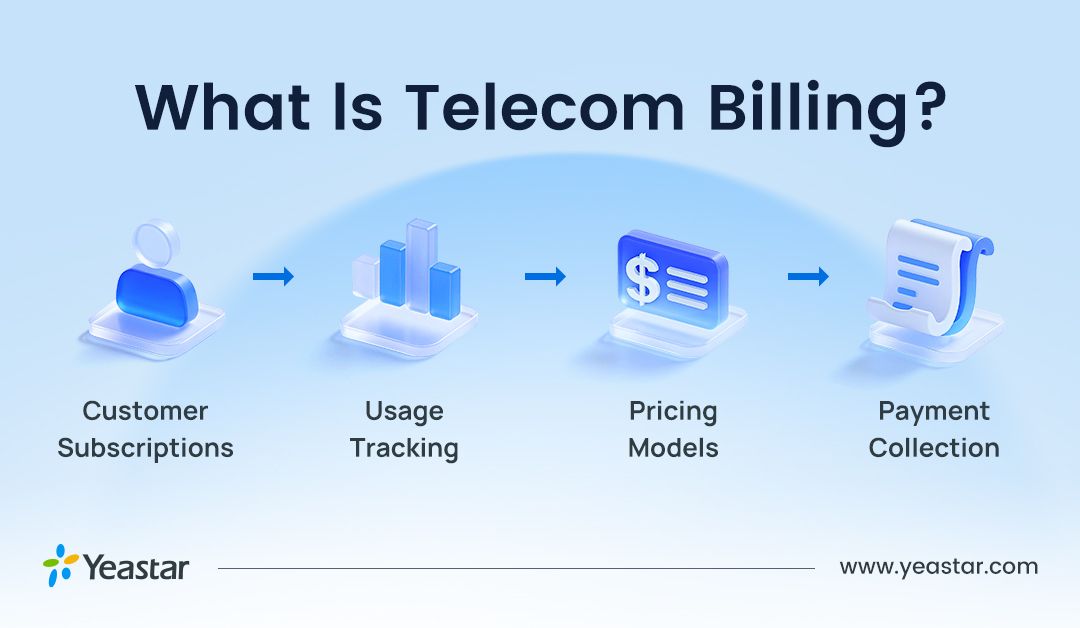
Telecom billing is an essential pillar for service providers, whether MSPs or ITSPs. It encompasses usage data collection, charge calculation, invoice generation, and payment management, while ensuring customer satisfaction and business profitability.
What is telecom billing?
Telecom billing involves managing the entire financial cycle of telecommunications services, from collecting usage data to receiving payments. It ensures accurate invoices, correctly applied taxes, and comprehensive revenue tracking.
Telecom billing cycle: three key models
The billing cycle follows three common models: postpaid, prepaid, and convergent. Postpaid allows customers to use the service before paying, prepaid requires payment in advance, while convergent combines multiple services into a single bill.
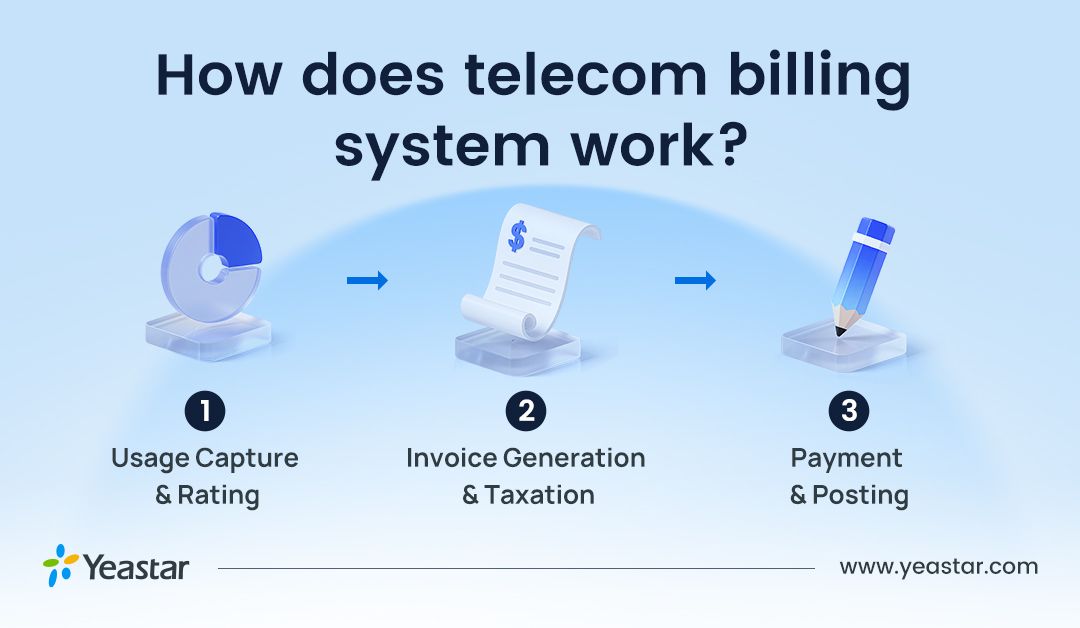
How a telecom billing system works
The process is divided into three phases: capturing and rating usage data, generating the invoice with taxes and recurring charges, then collecting and recording payments. Each phase ensures accuracy and financial closeout.
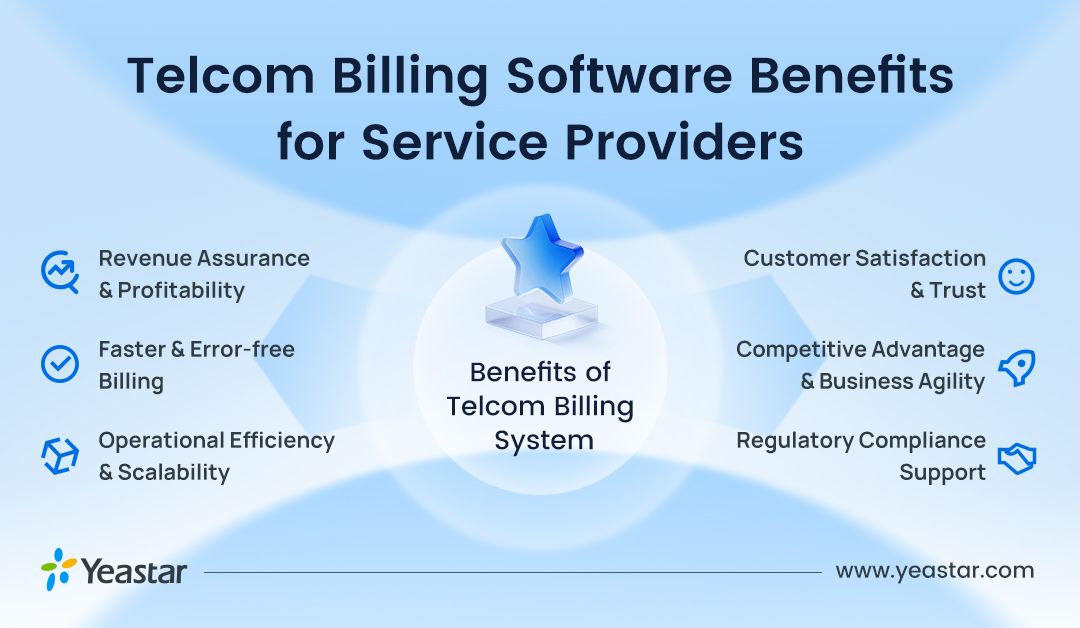
Why billing is crucial for MSPs and ITSPs
Reliable billing ensures revenue security, optimizes operational efficiency, strengthens customer satisfaction, and provides a competitive advantage through the ability to analyze trends and offer targeted services.
How Yeastar simplifies telecom billing
Yeastar automatically integrates CDRs, enables API integration with third-party billing solutions, and provides accurate call tracking, thereby facilitating accurate invoice generation and revenue management.
Benefits of partnering with Yeastar
Yeastar offers unified communications solutions, white-label opportunities, effortless scalability, and open APIs for complete customization.
The Yeastar team supports businesses and integrators in assessing their needs, selecting an architecture, and preparing for deployment.