
The VoIP market is growing rapidly, but competition is also intense. Decision-makers often remain hesitant, overwhelmed by the options or unsure about the differences between providers. This playbook aims to support, educate, and persuade them by guiding them step by step toward adopting a modern communications solution.
- Educate them about the benefits
Nearly half of businesses do not understand how a VoIP or UCaaS solution can really help them. You therefore need to convince them that VoIP is a genuine business driver that improves productivity, supports remote work, reduces telecom costs, and improves customer service. Keep the argument focused on business outcomes rather than technical features.
- Demonstrate the features
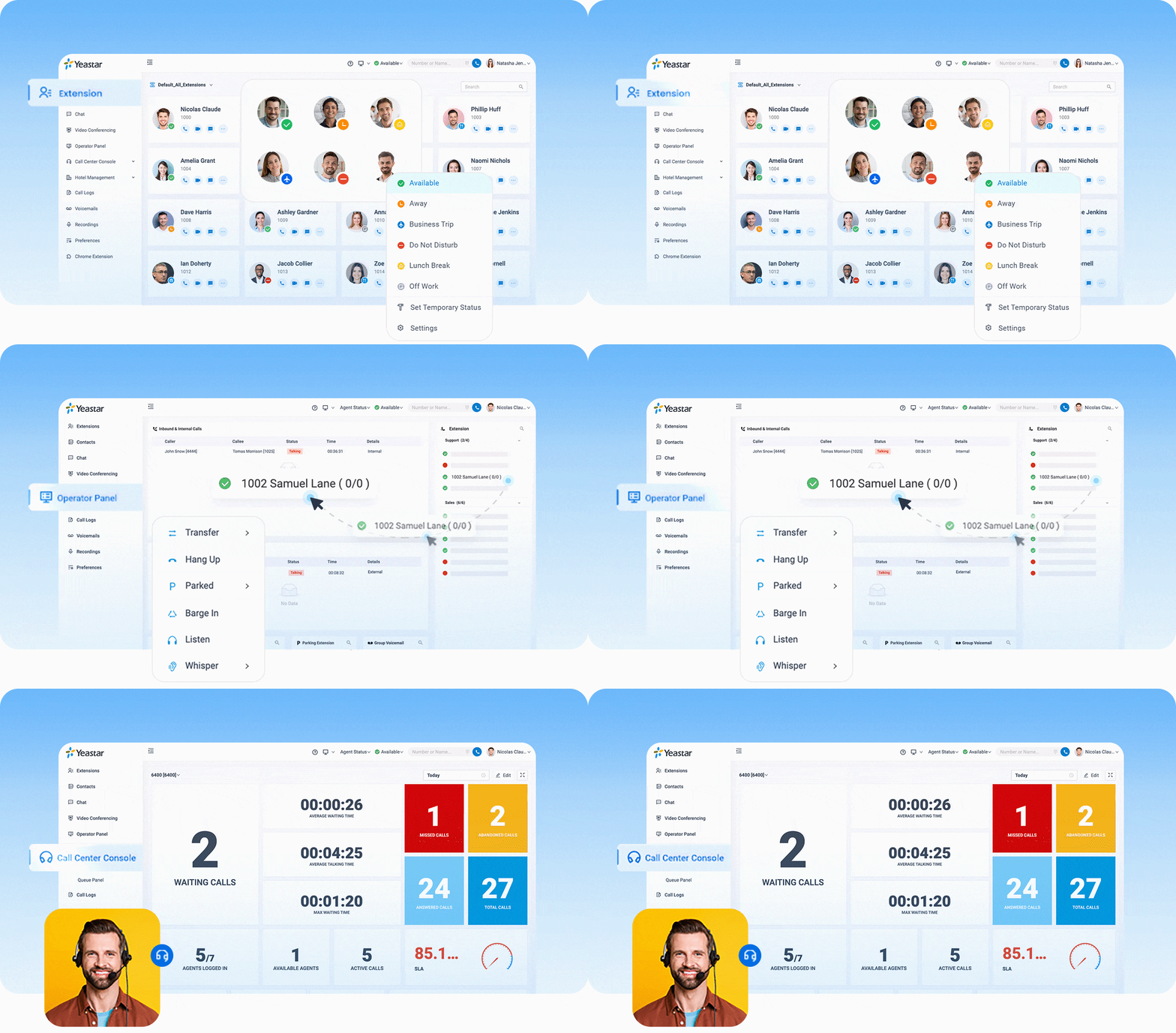
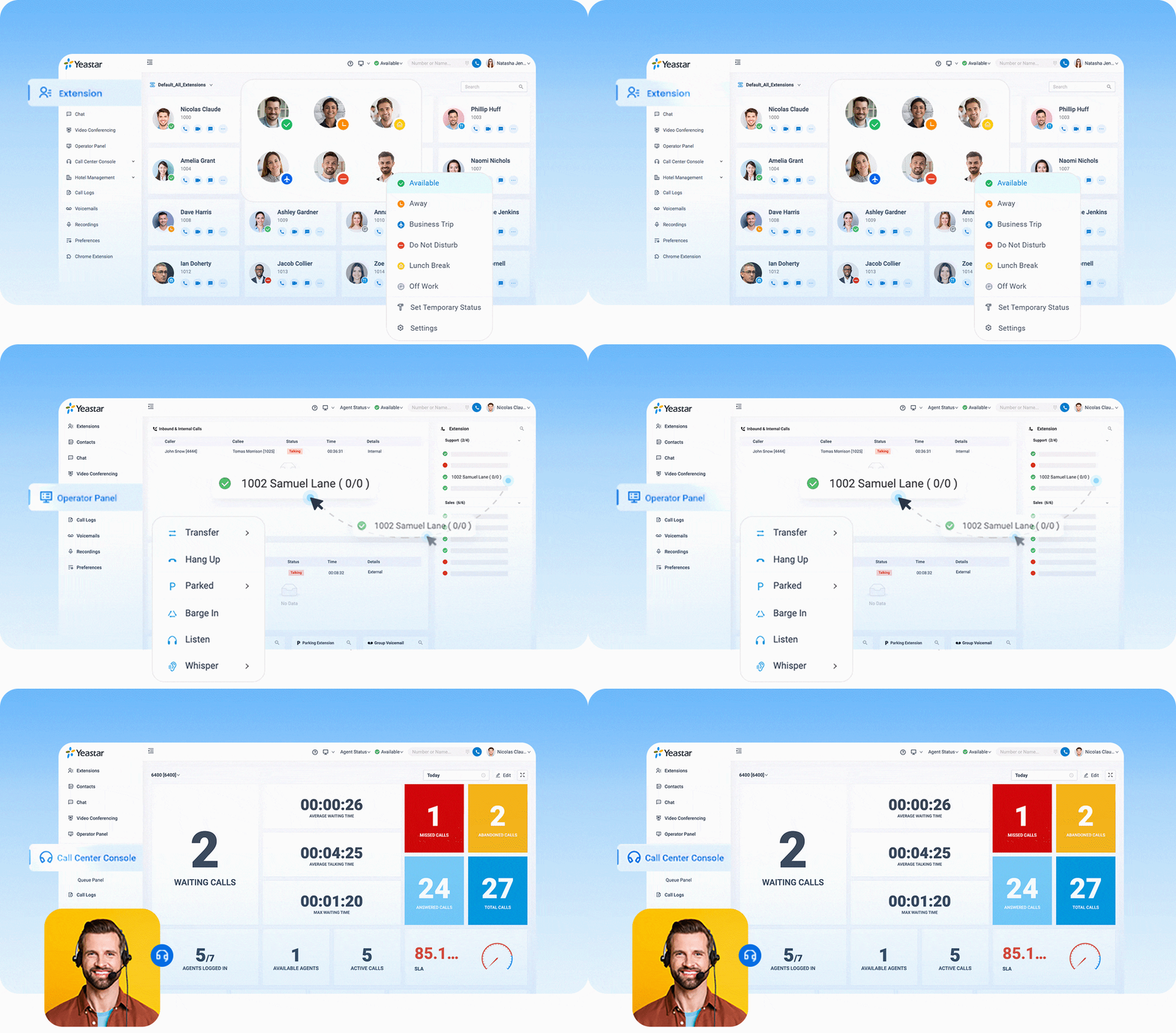
Once the “why” is established, you need to show concretely how the solution translates into tangible gains. Live or recorded demonstrations tailored to the prospect’s needs illustrate key functions such as the operator panel, click‑to‑call, CRM or Teams integration, line switching, and the mobile app. These demonstrations make the benefits tangible and facilitate decision-making.
- Use use cases, battlecards, and proof
Prospects remain cautious even when they are interested. Industry-specific case studies, comparative battlecards, and quantitative testimonials reduce perceived risk and accelerate the sales cycle. Highlighting concrete results, such as monthly savings or reductions in abandoned calls, reinforces credibility.
- Ensure a simple transition
Fear of migration is a major obstacle. Offering a detailed transition plan that includes number porting, training, and cut‑over planning reassures decision-makers. Highlighting past experience and successes demonstrates that the transition can take place without interruption.
- Commit to ongoing support
Service does not end with the sale. Offering post-sales assistance, onboarding plans, quarterly reviews, and SLA support ensures satisfaction and opens the door to upsells. This makes the customer feel supported and turns the relationship into a long-term partnership.
- Address objections before they become obstacles
Anticipating common objections (cost, downtime, technical skills, reliability, security, integrations, scalability) and preparing concise, benefit-oriented responses can turn resistance into an opportunity. Incorporating these scripts into battlecards and demonstrations reinforces the prospect’s confidence.
The Yeastar team supports businesses and integrators in assessing their needs, selecting an architecture, and preparing for deployment.